Most people doing Sarajevo in three days spend two of those in the Old Town. They walk Baščaršija, eat ćevapi at Petica or Željo, do the assassination corner, climb the Yellow Fortress for sunset. Then on the third day they look at the map and realise the more interesting half of Sarajevo’s story is outside the Old Town: the source of the Bosna river, the wartime tunnel under the airport, and the Olympic mountains that ring the city.
This is a day tour we drive a few times a week for guests who’ve done the Old Town and want one focused day on Sarajevo’s wider story. It works as a half-day if you cut it short, or a full day if you push out to Jahorina. It’s a suggested itinerary, not a packaged tour. We’re a private transport company. We provide a vehicle with a driver. The route below is what we’d plan for ourselves on a Sunday with one set of out-of-town friends. Use it as a starting point, not a fixed schedule.
Why these three stops belong together
The Old Town tells you what Sarajevo was: an Ottoman trading hub, then an Austro-Hungarian European city, then a 1984 Olympic capital, then a city under siege. The three stops below tell you the rest:
- Vrelo Bosne (the springs of the Bosna River). 12 km west of the Old Town in Ilidža. A protected nature park, a 3.5-km tree-lined avenue (Velika Aleja), and a horse-drawn carriage tradition that dates back to 1895.
- Tunnel of Hope (Tunel spasa). The 800-metre tunnel dug under Sarajevo Airport during the 1992-1995 siege, the only physical link between the besieged city and the outside world. Now a museum.
- Jahorina. The Olympic mountain 25 km south of Sarajevo. Not just a winter resort. The 1984 Alpine venue, mountain trails, summer cable car, and a clear view back over the city.
Vrelo and the Tunnel are 200 metres apart. Both are in Ilidža, on the south-west edge of the city. Jahorina is in the opposite direction, 25 km south on a mountain road. Doing all three is a full day. Doing the first two is a half-day.
The full day, hour by hour
09:00, Pickup in the Old Town
From your hotel or apartment. The drive to Ilidža is about 25 minutes through Marijin Dvor and Stup. Traffic is heaviest before 9 and after 16:30, so a 9:00 start avoids the morning rush both ways.
09:30 — Vrelo Bosne (1.5 to 2 hours)
Park near the entrance to Velika Aleja. The avenue itself is 3.5 km long, planted with chestnut and plane trees in 1888 and 1892. You can walk it, ride a bicycle, or take a fijaker (horse-drawn carriage) to the spring. The carriage is the touristy choice. It’s also genuinely the best one for this trip — the avenue is long enough to be a real walk in the heat, and the carriage is a Sarajevo tradition.
Practical things to know:
- Park entrance: small fee, around 2-6 KM per person: foreign visitors and residents pay different rates. Cards aren’t always accepted at the gate. Bring a few KM in cash.
- Fijaker: rates have moved up in recent seasons. Currently about 25 KM one way for the carriage (up to 4 people), around 20-25 minutes each direction. Confirm price before getting in.
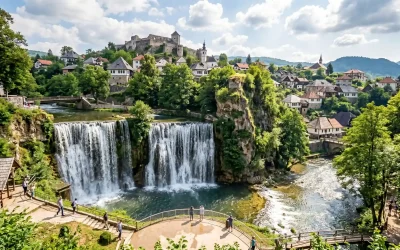
- The springs themselves: at the end of Velika Aleja, the Bosna river bursts out of several karst springs at the foot of Mount Igman. Cold, clear water, swans, ducks, wooden bridges, paths between small islands. Plan 30-45 minutes here.
- One restaurant inside the park, known for trout. Not cheap, but the location is the point.
Vrelo isn’t a long stop. An hour and a half is enough to walk in, do the springs, take the carriage back. If you want a longer breather, add coffee at one of the bistros along the avenue.
11:30: Drive to the Tunnel of Hope (10 minutes)
The tunnel museum is in Butmir, on the south side of the airport runway, about 4 km from Vrelo Bosne. By car it’s a 10-minute drive. From an Old Town starting point you’d lose 30 minutes; doing both Vrelo and the Tunnel back-to-back is the efficient call.
11:40 — Tunnel of Hope (1 to 1.5 hours)
This is among the most affecting museum visits in Bosnia. The Kolar family house, where the northern end of the tunnel was hidden, is now the museum. You watch a short documentary about the siege and the tunnel construction, walk through about 25 metres of the original tunnel section (1.6 metres high, most adults have to stoop), and look at exhibits of wartime artefacts in the courtyard and house.
Practical:
- Entry: 20 KM (~€10.50) for adults, 8 KM (~€4.50) for students. Audio guide 3 KM. Children under 6 free. Cash only.
- Hours: April 1 to October 31, 8:30-17:30 (last entry 17:00). November 1 to March 31, 9:00-16:00 (last entry 15:30).
- Time needed: 45 minutes to 1 hour to do the documentary, walk the tunnel, see the courtyard. 1.5 hours if you take your time with the photographs and documents inside the house.
- Note: the staff don’t run guided tours. The information is in the documentary, in the audio guide, and on the displays. If you want a guided experience with a survivor’s perspective, that’s a separate booking with a specialist tour company.
The tunnel hits harder when you’ve already seen the damaged buildings and the sniper’s view from the Yellow Fortress. If you’ve done the Old Town first, the museum makes the larger story click into place.
13:30 — Lunch in Ilidža (45-60 minutes)
A handful of decent options near the tunnel. Restoran Vrelo Bosne inside the park, or back towards the centre, the Ilidža area has plenty of grills doing ćevapi, pljeskavica, and burek for under 15 KM per person. Driver waits.
If you’re stopping after the Tunnel and not continuing to Jahorina, this is also a good place to wrap up. Vrelo + Tunnel + lunch is a solid 4.5-5 hour half-day. Drop-off back in the Old Town by 14:30 or 15:00.
14:30 — Drive to Jahorina (45-60 minutes)
From Ilidža back through the city and out the south side, on the road through Pale and up the mountain. The drive is about 35 km in summer conditions, longer in winter when the road can require chains. The route climbs from 500 metres in the city to 1,300 metres at the resort base.
Note for winter visits: our drivers carry chains, and the vehicles are fitted with winter tyres from November to April. If you’re driving yourself, the road is technically open but you need proper winter equipment after fresh snow.
15:30. Jahorina (1.5 to 2.5 hours)
What you do here depends on the season.
Summer (May to October): the resort is quieter than in winter, but most of the lifts run for hikers and bikers. The Poljice six-seater takes you up to about 1,800 metres for sweeping views of the surrounding mountains. There are marked walking trails of various lengths around the plateau. Mountain bikers come for the lift-served downhill trails. The summit area has cafes and a couple of restaurants. Sunset from the upper plateau in summer is one of the better views in Bosnia.
Winter (December to March): if you’re not skiing, an afternoon visit means hot chocolate at one of the slope-side bars, watching the skiers, and walking around the village. The mountain looks its best after fresh snow. Day-pass for the cable car (without skis) is sometimes available, but check at the lift office. For a full breakdown of trails, lifts, and ski pass prices, see our Jahorina ski slopes guide.
What to skip: if it’s a grey day or low cloud, skip Jahorina entirely. The point is the view, and you can’t see it through fog. Better to wrap up after the Tunnel and use the time for an extra coffee in the Old Town. If you’d rather see a different Olympic mountain, Bjelašnica is the bigger Olympic peak west of the city (alpine events were held here in 1984), and Ravna Planina is the smaller, family-friendly resort closer to Pale.
17:30-18:00 — Drive back to Sarajevo (40-50 minutes)
Same road back. By the time you’re in the Old Town it’s around 18:30. We typically wrap up the day with a drop-off at your accommodation or at a restaurant if you’ve decided to eat in the centre.
Half-day version (5-6 hours)
If you only have a morning or an afternoon, drop Jahorina. Vrelo Bosne plus the Tunnel of Hope is a complete experience. You get the city’s natural side and its wartime story in one half-day, with time for a sit-down lunch in Ilidža or a return to the Old Town.
- 09:00 — Pickup
- 09:30 — Vrelo Bosne (1.5 hours)
- 11:00: Tunnel of Hope (1.5 hours)
- 12:30: Lunch in Ilidža (1 hour)
- 13:30 — Drop-off in the Old Town
This version costs less and is what we run most often. The full Jahorina day is for guests who really want to see the mountain, particularly in summer.
An alternative third stop: Trebević
If you’d rather stay closer to the city than drive 25 km out to Jahorina, Trebević is the alternative. The mountain rises directly above the south side of the Old Town. The 1984 Olympic bobsled track on Trebević is one of the city’s more unusual sights. Abandoned, covered in graffiti, and walkable end-to-end. The Trebević cable car runs from the Bistrik neighbourhood up to the bobsled area in 8 minutes.
This makes more sense if:
- The weather is uncertain. Trebević is closer if you have to bail.
- You want a shorter day — Trebević is a 2-3 hour stop.
- You’re interested in the Olympic + war story specifically. The bobsled track was an Olympic venue, then a Bosnian Serb artillery position during the siege. Same theme as the Tunnel of Hope, different angle.
For a Sarajevo-only Olympic day tour, the combination Vrelo + Tunnel + Trebević cable car works as a tighter, more focused 7-8 hour route, all within 15 km of the Old Town.
Why book a private driver instead of doing this on your own
You can do most of this yourself. The Tunnel of Hope is reachable by tram 3 to Ilidža and then a 30-minute walk or short taxi to Butmir. Vrelo Bosne is at the end of the same tram line plus a 10-minute walk through Velika Aleja. Trebević is reachable by the cable car from the Old Town. Jahorina is the only one that’s awkward without a car. If you’re piecing it together with local taxis, our guide to the main taxi companies in Sarajevo covers numbers, fares, and which ones answer late at night.
What a private driver gets you on this particular route:
- Multiple stops in one day. The bus and tram combinations can technically connect Vrelo, Tunnel, and Jahorina in a day, but the schedule is tight and you’ll lose 90 minutes to waiting. With a private car, the day flows.
- Door-to-door pickup. Especially useful if you’re staying in the Old Town pedestrian zone, where taxis can’t come to the door anyway.
- Flexibility on the third stop. Once you’ve done Vrelo and the Tunnel, you can decide based on weather and energy: go to Jahorina, switch to Trebević, or call it a half-day. We won’t push you to drag out a tired day.
- Winter access to Jahorina. The mountain road needs winter tyres. Most rentals come without chains, and the rental car shops won’t recommend the road for tourists in January. Our drivers do this run weekly all winter.
For your dates and group size, request a fixed quote and we’ll come back with the price for the version you want.
What’s included with the vehicle, and what isn’t
Because “tour” can mean different things, the practical breakdown:
What we include:
- The vehicle for the agreed time (sedan, van, or minibus depending on group)
- An English-speaking driver
- Fuel, tolls, parking
- Pickup and drop-off at your Sarajevo accommodation
- The flexibility to change stops on the day
What’s not included:
- Vrelo Bosne entrance (around 2-6 KM per person)
- Tunnel of Hope entrance (20 KM adult, 8 KM student)
- Fijaker carriage at Vrelo (25 KM one way for the carriage)
- Jahorina cable car or summer lift (varies, around 15-25 KM in summer)
- Lunch and drinks
- A licensed tour guide. We’re a transport company — the driver drives, answers questions, knows the route. Not a guide who walks the museums with you. If you want a guide for the Tunnel specifically, several specialist tour companies offer that and we can recommend one.
If you’ve researched a stop or a restaurant we haven’t mentioned, tell the driver. We’re happy to take you. The route above is just our default suggestion.
When to do this
- April to October is the natural window. Vrelo Bosne is at its best with full leaves on Velika Aleja, and Jahorina is accessible without winter equipment.
- July and August are hot and busy. Vrelo gets crowded on weekends. The Tunnel is air-conditioned, but the queue outside isn’t. Start at 9:00 to beat the rush.
- November to March works for the half-day version (Vrelo + Tunnel) without trouble. Jahorina is a winter ski day, not a sightseeing add-on, unless you specifically want to see snow.
- Avoid: Mondays and Tuesdays in low season for the Tunnel, opening hours can shorten and the audio guide stock can run out. Weekends in summer for Vrelo — the fijakeri queue can be 30 minutes.
For pricing and booking
Day rates depend on the version (half-day, full-day, or Trebević alternative), group size, and pickup point. To request a fixed quote, send us your dates and group size. The booking form on the Sarajevo Transfer homepage covers most variants.
If you only want the Jahorina part — for skiing in winter or hiking in summer — our direct Sarajevo to Jahorina transfer is the simpler round-trip. For longer routes that combine this Sarajevo day with Mostar or central Bosnia, the Sarajevo to Mostar private transfer handles the southbound day, and our Bosnia private tours page has multi-day combinations. Most guests do this Sarajevo day on day three, after the Old Town and a Mostar trip — though if you’ve already done both, the Sarajevo to Jajce and Travnik day trip is the natural next step into central Bosnia.
Frequently asked questions
How long is this Sarajevo day tour?
About 9-10 hours if you include Jahorina. About 5-6 hours for the half-day version (Vrelo Bosne + Tunnel of Hope + lunch). The Trebević variant is around 7-8 hours.
How much is the Tunnel of Hope museum?
20 KM (~€10.50) for adults, 8 KM (~€4.50) for students, 3 KM for the audio guide. Children under 6 are free. They take cash in Bosnian Marks only — no cards, no euros.
Is Vrelo Bosne worth the trip?
For most travellers, yes, especially in spring and summer. The 3.5-km tree-lined avenue and the carriage tradition are unique, and the springs themselves are genuinely pretty. In autumn the foliage is a draw. Skip it on a rainy day or when the leaves are off the trees in winter.
Can I see the Tunnel of Hope without a guide?
Yes. The museum is set up for self-visit. There’s a 10-minute documentary on a loop, a downloadable audio guide, and information panels in English. Most people spend 45 minutes to an hour and feel they’ve understood it.
Do you do a Sarajevo war tour with a survivor as a guide?
That’s not what we offer. We’re a transport company. Several specialist tour companies in Sarajevo run war tours with guides who lived through the siege, and that’s a different kind of experience. We can recommend one if you want both: a private driver for the day plus a survivor-led guide for the Tunnel section.
Is Jahorina worth visiting in summer?
Yes if you like mountain views and quiet trails. The resort is much less busy than in winter, the cable cars run for hikers, and the air at 1,800 metres is welcome on a hot Sarajevo day. Skip if the weather is grey; you’re going for the view.
Can we do this with kids?
Yes. Vrelo Bosne is the most kid-friendly stop — the carriage ride, the swans, the open paths. The Tunnel of Hope is appropriate for older kids and teens (the documentary covers wartime in a serious way), but younger children can find the cramped tunnel section unsettling. Jahorina in summer is fine for kids who can handle a short walk.
Can the route start from the airport instead of the Old Town?
Yes. The airport is in Ilidža, 5 minutes from Vrelo Bosne and the Tunnel. We can do an arrival-day version where we pick up at the airport, do Vrelo and the Tunnel, and drop you in the Old Town with luggage at the end. It’s a useful way to handle a tight schedule on day one.